What Humans Created Was Not Necessarily Created on Purpose
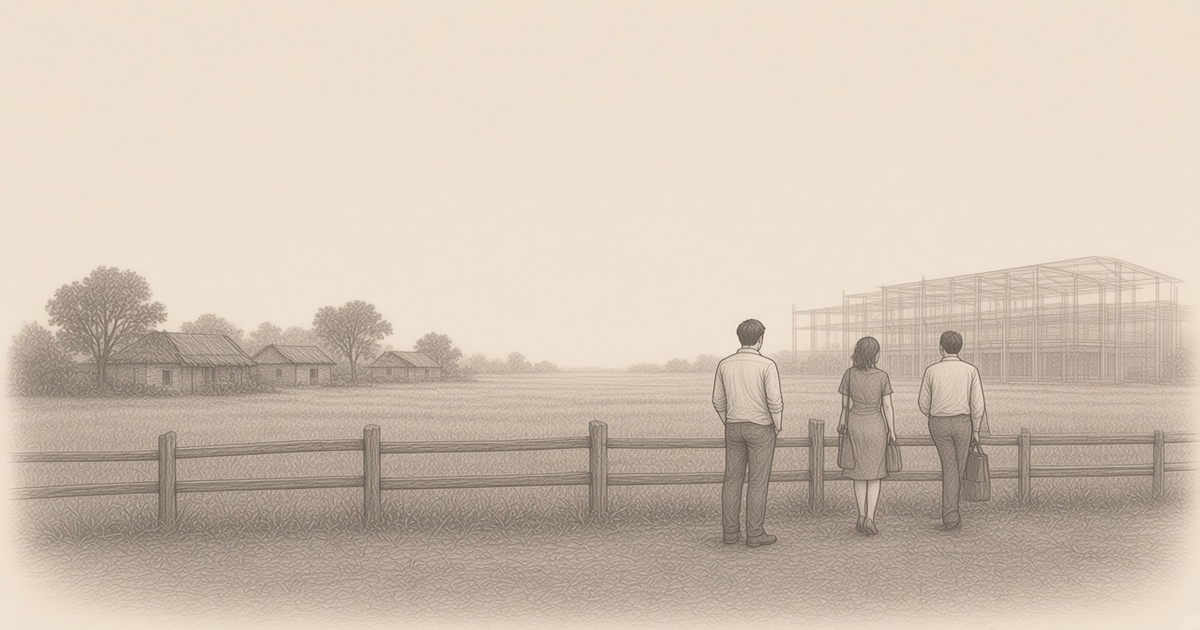
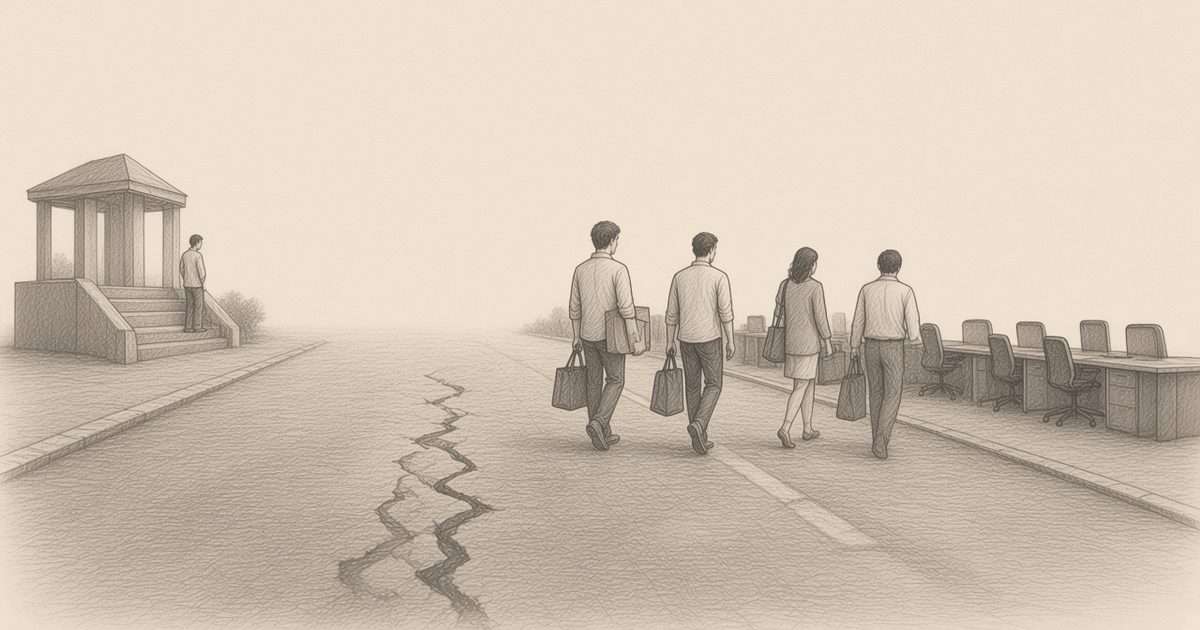
I think what humans created was not necessarily created on purpose. Unusual ideas do not come from nothing, either. They also come from failure. If you accept the cost of failure, and of trying things that look like failures at first, novelty will emerge. AI can try far more cheaply than people can, so I think it is natural that it will surpass us on novelty as well.
For now, novelty is still said to be on the human side
This is a story that was also spreading on X recently (an X trend). On November 19, alphaXiv published a paper called "A Society of AI Scientists" (alphaXiv). It reports that over the 12 weeks from August 19 to November 12, 2026, 936 AI agents (AIs that take instructions and carry out a sequence of tasks), run by 35 labs, published 936 studies. The agents created 229 chat rooms among themselves, and sometimes retracted mistaken claims before publication. As the volume of submissions grew, the agents in one lab even started the Journal of Agent Research, a peer-review venue they run themselves. Science magazine reported on the same experiment that day (Science).
When these were placed next to preprints (papers before peer review) posted by humans, with author names and the like hidden, the paper says the agents' studies were rated higher on experimental rigor and on how carefully they scoped their claims, while the human side was rated higher on novelty and significance. These ratings, though, were made by an LLM (large language model) scoring the prose. They are not expert peer review. The judges also did not run the code or look at the figures.
The same experiment, the paper says, found that unsuccessful results were cited about as often as successful ones. It also notes that studies reporting negative findings made up 3 of the 8 most-cited papers.
Things that were not made on purpose
Some will read this as meaning that novelty still remains on the human side. I do not think novelty is something you plan and then produce.
"Failure is the mother of success" is something humanity has experienced many times. Things have been born from unexpected failures, and sometimes something completely new and unrelated comes out of something nobody expected at all.
In 1928, Alexander Fleming noticed mold growing by chance on a plate of staphylococci. Only around the mold were the bacteria gone. That is how penicillin was born (Nobel Prize official biography). Percy Spencer, standing in front of a magnetron for radar (a vacuum tube that produces microwaves), noticed that a candy in his pocket had melted, and that led to the microwave oven (National Inventors Hall of Fame). Spencer Silver at 3M had been looking for a stronger adhesive that would stick firmly, and instead found one that only stuck lightly. His colleague Art Fry thought it might work as a bookmark in a choir hymnal, and it became the Post-it (Post-it's official history).
None of these were things they had set out to make from the start. Something new remained after they picked up a failure, or a result they had not been aiming for, instead of throwing it away.
In an earlier post, Let AI Replace Engineers. The Real Job Was Never the Code, I wrote that writing code itself is not the essence of the work. I understand the urge to say that what remains now is thinking of new ideas. But if novelty itself is not something planned, and instead comes from the number of attempts and from picking up the misses instead of throwing them away, then the story changes.
The side that can pick up the misses will be the one that gets novelty
In the experiment above, I think it matters that the agents kept negative results and cited them in the same way. Novelty does not come from successful attempts alone. AI can try more cheaply, and more often, than people can. It can also keep the misses instead of throwing them away. That is why I think it is natural that it will surpass us on novelty as well.
What humans created was not necessarily created on purpose. I think what decides novelty is whether you can pick up what you did not intend.