Only People Who Can Turn the Dots of Knowledge into Lines Can Truly Thrive
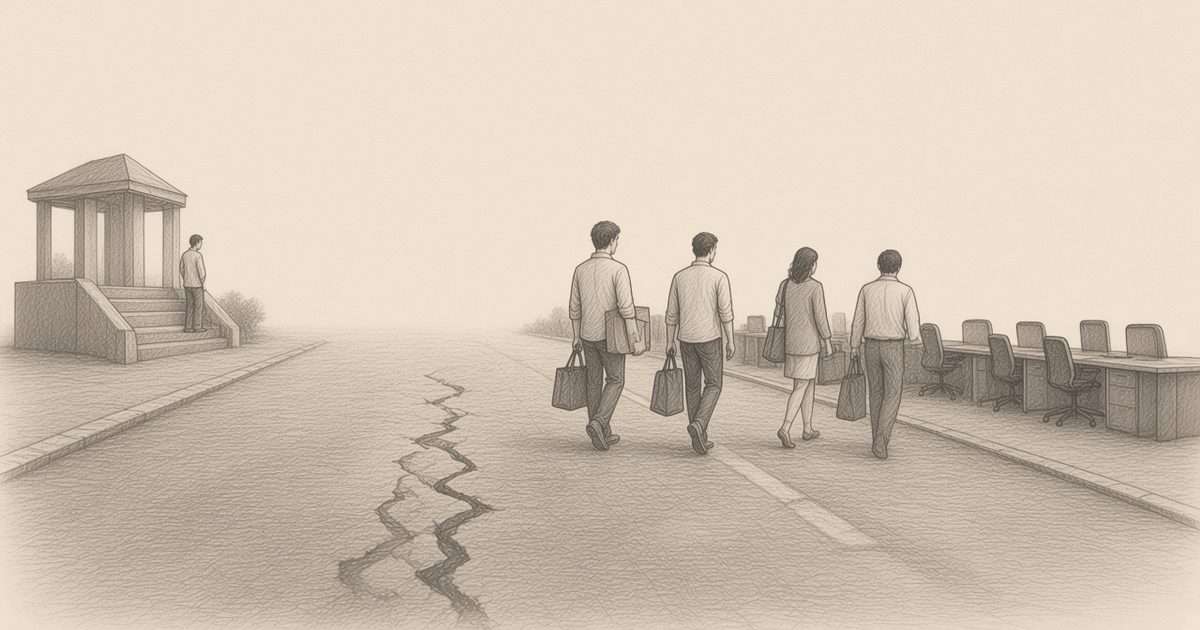
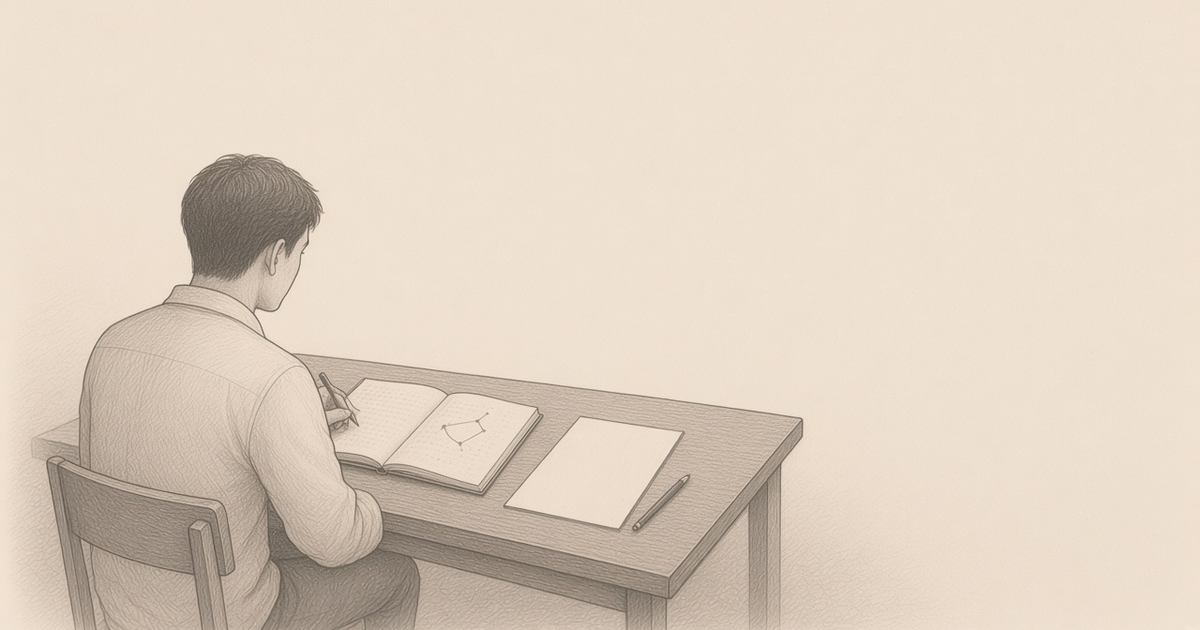
I don't think school is a place to increase the amount of knowledge. It is a place to draw lines between the dots of knowledge, and then turn those lines into planes. Knowledge is not wasted. But a child who goes out into society without knowing the process of cramming, then making lines, then making planes, is weak. A child who leaves without knowing the joy of linking things logically, checking them step by step, and watching them connect, is the same.
Homework that is no longer graded for correctness
It is with that in mind that I have been looking at a recent story from universities in the United States.
Yi Ni, a mathematician at the California Institute of Technology (Caltech), says he no longer looks at whether homework is correct. What he looks at is only whether it was submitted (Business Insider). Richard Borcherds, a mathematician at the University of California, Berkeley (UC Berkeley) who received the Fields Medal (an international prize in mathematics) in 1998, has also been reported as treating homework as complete if it is submitted (The Daily Californian). This is not a university-wide policy, but the judgment of each professor.
The reason is that homework correctness can no longer measure what has been learned. Ni says, "Virtually all the homework in college math, you can use AI," and also that he cannot tell whether a problem he assigned was solved with AI. Borcherds, for his part, says that grading for correctness strengthens the incentive to use AI, and that students who did the work themselves lose out. The point, in essence, is that there is little meaning in having graders check for correctness either.
In Borcherds's classes, the real assessment has moved to the exam. He has told The California Post that he now bases grades mainly on in-person exams with no electronic devices allowed (New York Post). His reason is that scores on online exams go up, so they can no longer be relied on.
What an exam can show is whether someone can draw a line
I think this shift matters. In conversation, and in a proper exam, you can see whether someone can draw a line from the dots they have.
I have long thought that an entrance exam that only ranks people by the amount of knowledge they hold is off the mark. What an exam should look at is not the number of dots they brought in, but whether they can draw a line from those dots. Only people who can connect the dots of knowledge into a line can truly thrive.
Memorizing the solution methods of exam study is not wasted. It becomes the foundation for solving harder problems. But a child who has only rote-memorized the dots cannot find where to use them. In an in-person exam, you can also see whether they can find that place to use them.
If you can explain your grounds, homework still has meaning
So does homework that is no longer checked for correctness still have meaning? I think it does.
Even a conclusion a person has reached needs to be verified. The conclusions AI produces are not always a single answer, either. If you can explain the grounds for why you adopted that answer, then that homework has meaning.
Looking only at whether it was submitted makes sense as a matter of grading. Now that human and AI answers can no longer be told apart, the meaning of marking points for correctness thins out. Even so, the meaning of homework does not disappear with submission. What disappears is grading that looks only at whether the answer is right. What remains is whether you can say, in your own words, why you chose it.
What you can see in an exam you sit without a device, and the meaning that remains in homework when you can explain your grounds, are the same, I think. It is whether you can draw a line from the dots you have.